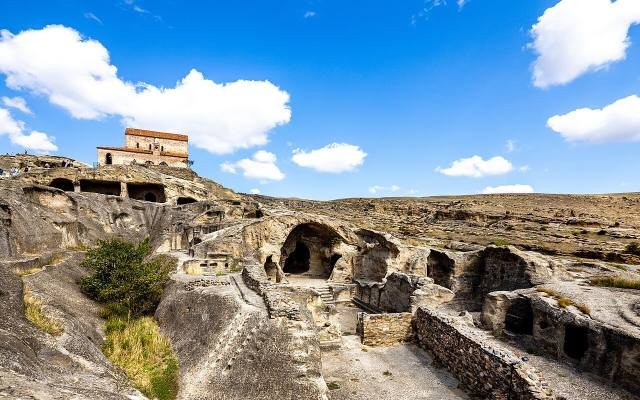
 Day trip
Season: Year-round
Uplistsikhe, Gori and Mtskheta day trip from Tbilisi
- The rock-cut town of Uplistsikhe above the Mtkvari river
- Gori Fortress or the Stalin Museum, plus Jvari and Svetitskhoveli in Mtskheta
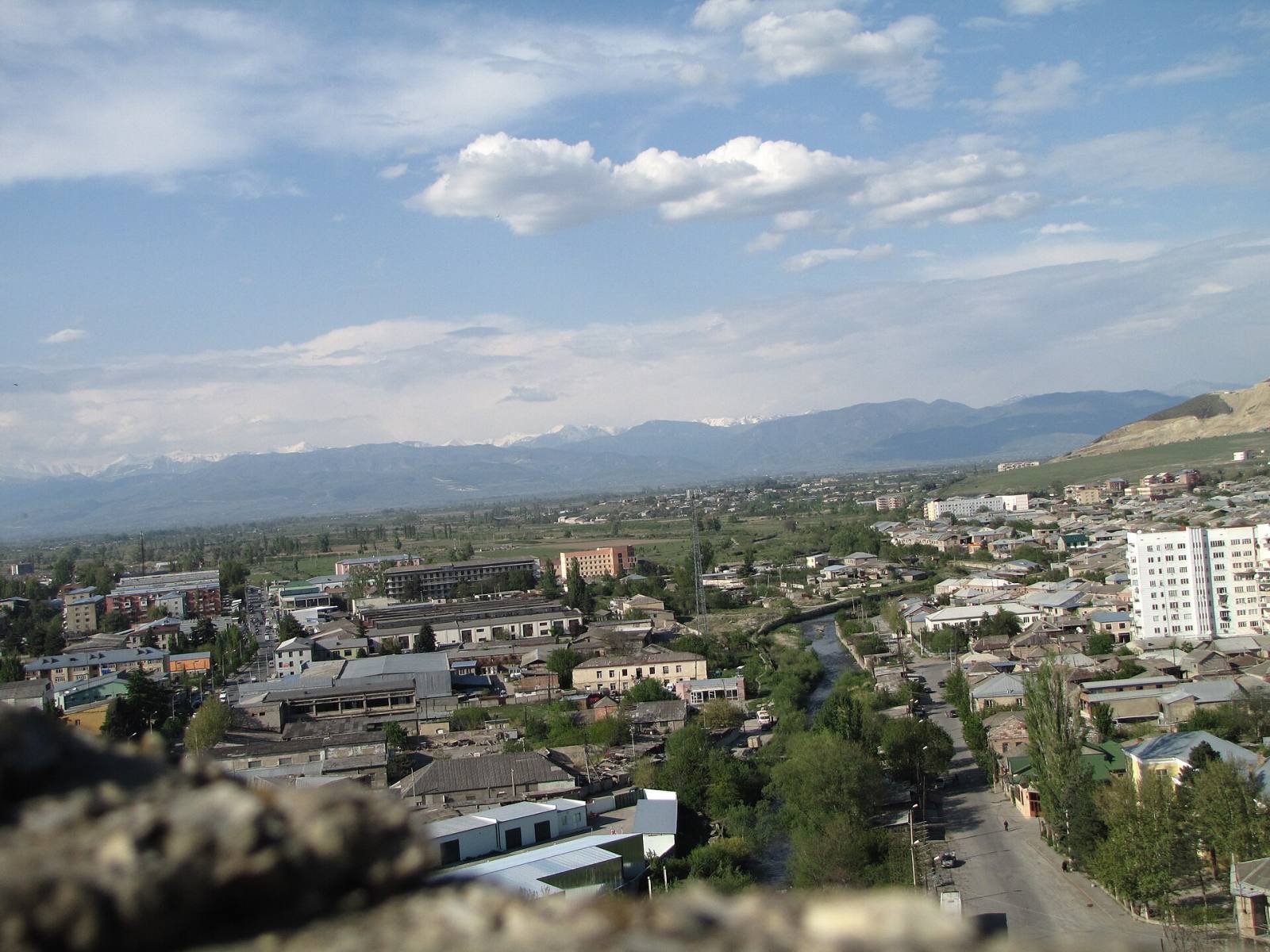
Travel guide
When to go, what the weather is like, festivals through the year, money, safety and what to know before your first visit to Gori and Shida Kartli.
| Location | Eastern Georgia, along the Mtkvari river west of Tbilisi |
|---|---|
| Regional capital | Gori, Georgia’s fifth-largest city |
| Main towns | Gori, Kaspi, Kareli, Khashuri and Surami |
| Time zone | Georgia Time (UTC+4), no summer time |
| Currency | Georgian lari (GEL) |
| Airport | Tbilisi (TBS), about 1¼ hours from Gori |
| Plugs | Types C and F, 220 volts |
| Emergency number | 112 |
Shida Kartli has a continental climate, with hot summers and cold, dry winters. The sights are open all year, but spring and autumn are the most comfortable.
| Months | What to expect |
|---|---|
| March to May | Fruit blossom in the orchards around Gori, green hills and mild days. Easter is the biggest festival of the year. |
| June to August | Hot and dry, often above 30 °C. Visit Uplistsikhe early or late in the day. Surami’s cooler hills are popular in summer. |
| September and October | Rtveli, the grape harvest, and fruit picking in the orchards. Warm days, golden colours and often the best time to visit. |
| November to February | Cold, with frost and some snow. Quiet, with low prices; churches and museums stay open, and the Caucasus is often clear. |
Summer days are usually 28 to 32 °C in Gori, and the rock at Uplistsikhe gets very hot. Winters are cold, around 0 °C, with frosty nights.
Shida Kartli is very good value. A meal in a local restaurant, a marshrutka ride or a museum ticket costs much less than in Western Europe. Cards are accepted in Gori’s hotels, supermarkets and many restaurants, but carry cash for transport, taxis, villages and markets.
Book ahead
Day trip
Season: Year-round Private tour
Season: April to November
 Wine tasting
Season: Year-round
Good to know
Yes. Cards are accepted in hotels, supermarkets and many restaurants in Gori, but you will need Georgian lari in cash for marshrutkas, taxis, village guesthouses, markets and some ticket desks. ATMs are easy to find in Gori and Khashuri.
Many restaurants add a service charge of about 10% to the bill. If they do not, leaving around 10% for good service is appreciated. Tipping taxi drivers is not expected; round up if you like.
Dress modestly. Men should wear long trousers, and women a skirt below the knee and a scarf over their hair. Many churches have scarves and wraps at the door. Do not wear shorts or bare shoulders inside.
Georgian is the main language. Many older people speak Russian, and younger people often speak some English. Learn “gamarjoba” (hello) and “madloba” (thank you); they go a long way.