 Day trip
Season: Year-round
Uplistsikhe, Gori and Mtskheta day trip from Tbilisi
- The rock-cut town of Uplistsikhe above the Mtkvari river
- Gori Fortress or the Stalin Museum, plus Jvari and Svetitskhoveli in Mtskheta
Cave town
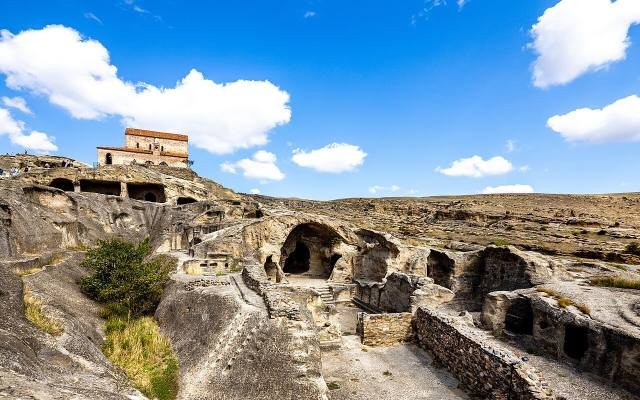
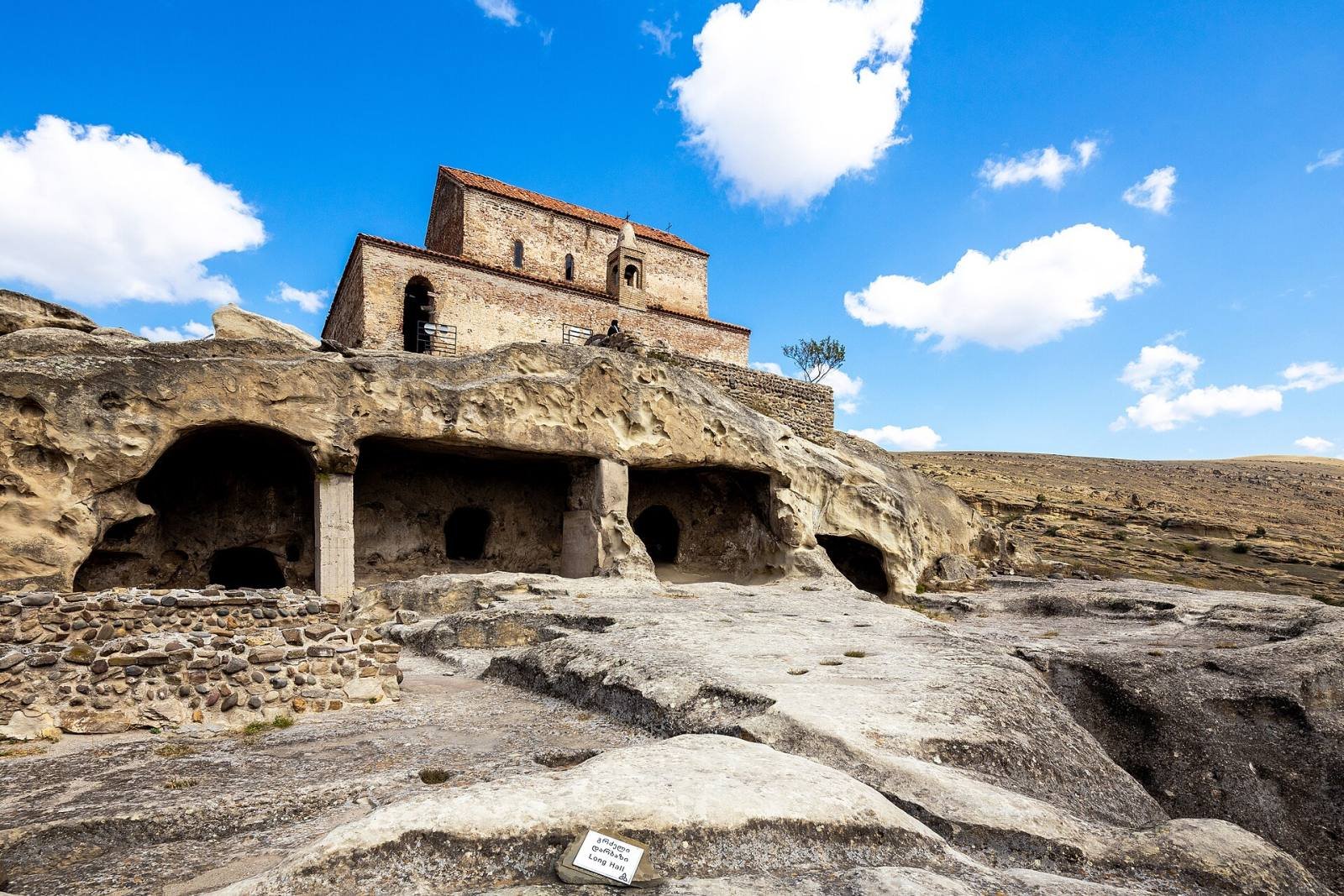
Uplistsikhe, “the Lord’s Fortress”, is a town cut into a sandstone ridge on the left bank of the Mtkvari river, about 10 km east of Gori. People lived here for some 3,000 years, from the late Bronze Age to the Middle Ages. Today you can walk its rock-cut streets, halls and cellars and climb to the church on top.
Uplistsikhe is one of the oldest towns in Georgia. It stood on a trade route through the heart of the ancient kingdom of Kartli, and in its prime, before Christianity came in the 4th century, it was a great religious centre with pagan temples cut into the rock. It lost ground to Mtskheta and later Tbilisi, but grew again when Arabs held Tbilisi in the 8th to 10th centuries. The Mongol raids finally emptied it. What remains is a strange and beautiful landscape of caves, steps and streets above the river.
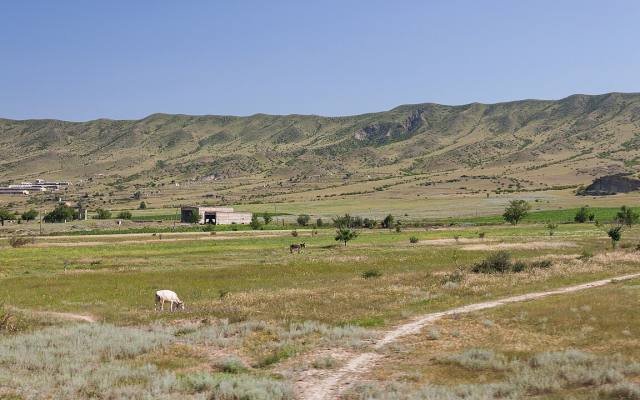
There is no regular public transport to the site. Take a taxi from Gori, about 20 minutes, and ask it to wait, or join a day trip from Tbilisi. By car, follow the highway west from Tbilisi and turn off at the signs before Gori. Read our guide to visiting Uplistsikhe from Tbilisi.
Book ahead
Day trip
Season: Year-round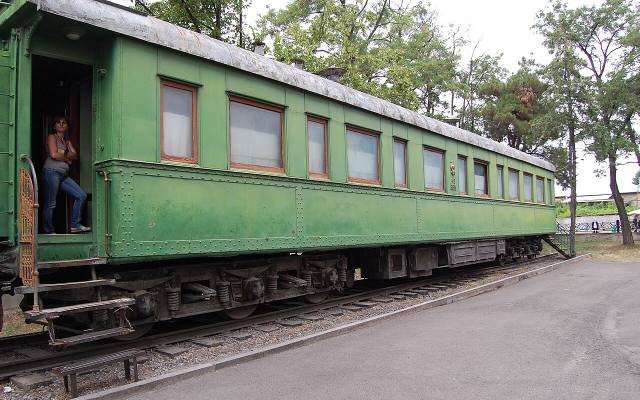 Day trip
Season: Year-round
 Sightseeing transfer
Season: Year-round
Nearby
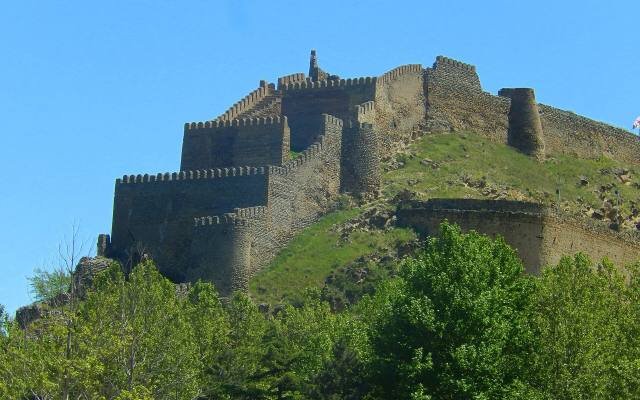 Fortress
The citadel above the city
A medieval citadel on the rocky hill in the middle of Gori, rebuilt in the 17th and 18th centuries, with free entry and views over the city and the rivers to the Caucasus.
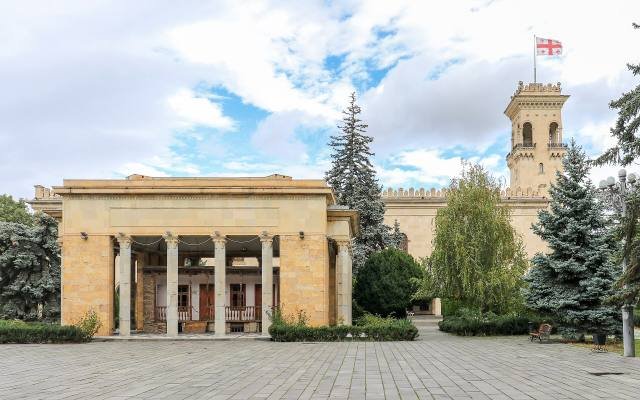 Museum
Soviet history in his home town
The museum in Gori dedicated to Joseph Stalin, who was born here in 1878, with the small house of his birth, Soviet-era exhibition halls and his armoured railway carriage.
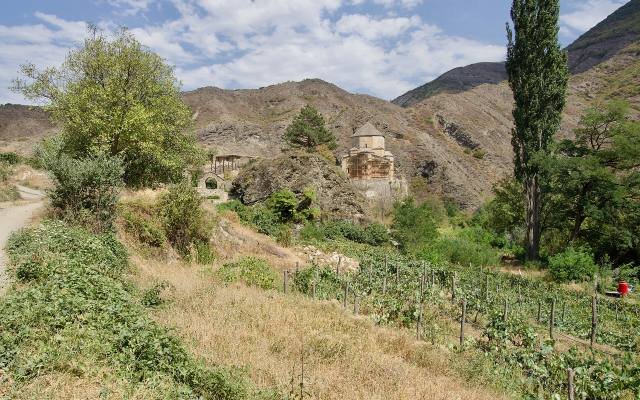 Church
Frescoes in a wine valley
An early 7th-century church in the village of Ateni, 10 km south of Gori, with some of the finest medieval wall paintings in Georgia and vineyards along the Tana river.